
Carr Club Music gives serious artists the team, tools, and support to stop doing everything themselves.
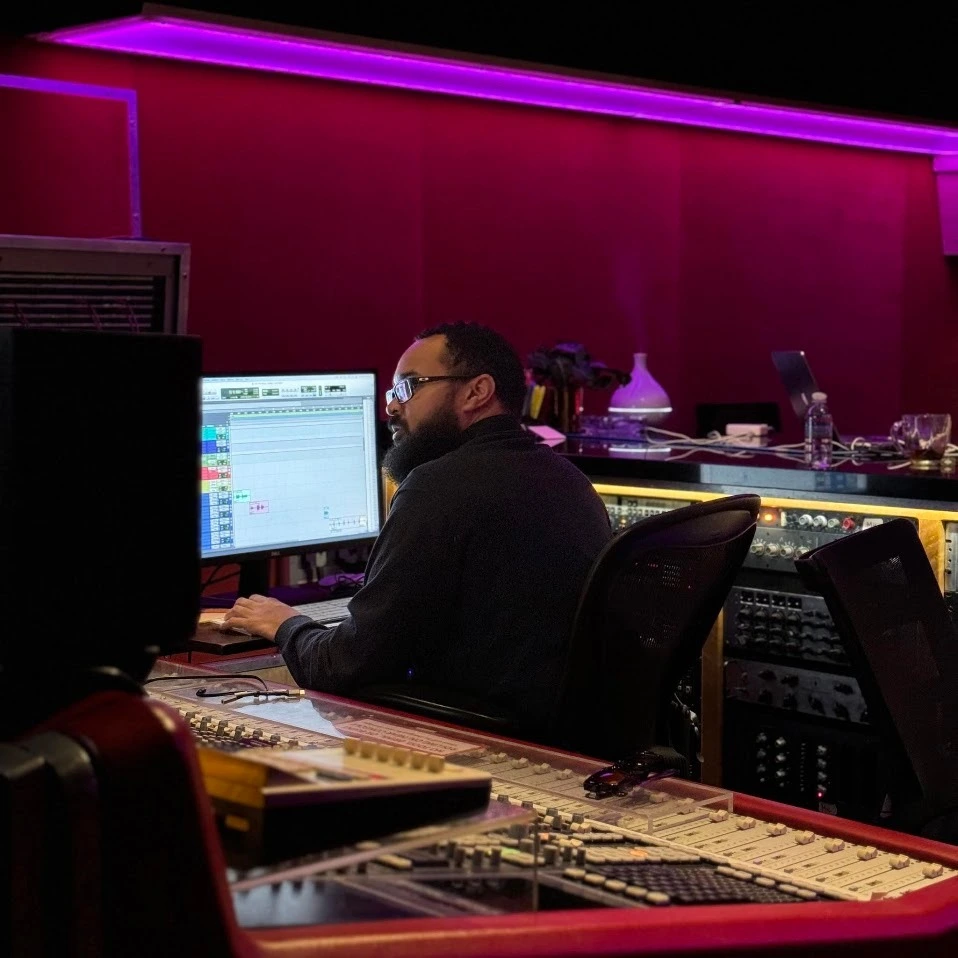
My mother passed from brain cancer when I was 11 and I did not know my father. I left the USA and moved in with my Aunt in the Cayman Islands for middle school. I start here because I did not know where I was headed in life.
Music gave me direction before I understood what I was looking for.
In elementary school, music was just another class I was not good at. I dreaded another squeak from my instrument in front of awkward stares. The backup band, that was me. Pretending to play just to get by, also me.
It was not until my middle school music teacher, Miss. Comisso saw something.
Her suggested instrument change from a clarinet to saxophone was the answer I needed. Playing a saxophone was like breathing. Just bliss everytime I blew into it. She also frequently complimented my “amazing ear”. Within one year I became the face of the school band and after winning all the competitions, I was the face of academic music in the Cayman Islands.
Just a year before, I attended the best school for music on the island and could not qualify for their band. In my second year with Miss. Comisso we ran into my previous teacher backstage at a competition. She thanked him for building my foundation while he and I shared a silent exchange. I was indeed the same kid who just a year ago could not “cut it”.
Her final assignment was a report on technology and music. I spent over three weeks practically living in the island library in preparation. I discovered Billboard Magazine, Rolling Stone, The Source…etc. In support of my passion she showed me to a recording software she installed on her school computer: Magix Music Studio. Im sure she soon regretted it, considering I would beg her to to not leave school so I could learn the software. When I caught wind of my cousin forgetting to pick me up from school on his scheduled days, I requested for him to pick me up everyday so I could get more time with the program.
For the presentation I volunteered classmates to play the keyboard while I recorded them into the software. When I played them their recording back, I still remember another student asking “are the piano keys moving by themselves?”. This was revolutionary as it was my first Digital Audio Workstation (DAW) recording, ever. Another student presented a program called Fruity Loops. It was a music sequencing program that played notes without the need of an instrument. Many of you know it as FL Studio today. Fruity Loops was made by a company named Image-line. Whoever made the call to make the full software downloadable for free, Thank You. You birthed a generation of producers.
After a long history of fights in school and bad grades (outside of music) I moved in with my sister in Miami, Florida. I had hopes of continuing music with a saxophone behind my fathers promise but it never came. Thankfully my sister had a computer at home so downloading Fruity Loops and getting to work was mandatory.
The goal was to play a supporting role shaping the artist and sound. I went by Orane2001. My name was Orane and I started in 2001 via Miss Commisso’s assignment. I started by writing/recording songs with classmates who would rap during lunch break on my sisters computer. In one sitting we would write, record, and export a song before the computer blew up. None of us had much life experience so coming up with three minutes worth of lyrics was exhausting. Completing a song was a huge accomplishment in itself no matter how it sounded. Watching our friends jaws drop listening to us on CD was proof enough I had a real future in music.
My friends would not return to continue making songs because it felt like a job, I quickly realized not everyone had my level of commitment. I did not like my voice but that was not going to stop me from making my dream come true. I transitioned from supporting role, to primary artist. My previous music competition experience removed any stage fright when I participated in talent shows. I still ended up getting boo’d every time. They also laughed when I rapped in class. It was humbling considering the praise I got in middle school. It was also blessing because I developed thick skin.
My sister was not fond of the topics from my favorite songs so she put a strict policy over what I could listen to. This allowed me to appreciate safer genres such as Rock, EDM and R&B.
I discovered underground radio in Miami and my favorite station played clean versions of rap albums so I did not have to sneak and listen. A local artist named Rick Ross received a lot of airplay for his song that said “remember my face, remember my name: Rick Ross…” He wasn’t lying because a few years later he broke through & no one would forgot his name. Seeing that in real time, motivated me.
I watched Compact Discs become obsolete due to the growth of technology. Record stores were closing and the dream started to fade. I quickly put together a collection of songs using downloadable instrumentals from a website called SoundClick. I created what would be my first project, DisoBayish (Disobeyish). I sold the CD’s in school and use the money to buy more blank CD’s to make more. This was my first job and I was determined to make it my career.
The FCAT restricted high school graduation if a student did not pass. The test was during 10th grade but if a student failed they had the option to re-take it as many times as necessery to pass before 12th grade. As as result of the amount of people who failed, every subject focused on the FCAT. I was in 12th grade with a 10th grade education. The school system seemed broken and my CD was making money so naturally music was where I was headed. After school, I juggled On The Job Training (OJT) learning Graphic and Web Design at Barry University and played football the other days of the week.
One of my classmates worked at the local record label Poe Boy Entertainment and brought my CD to the owner’s brother: James “Freezy” Prince. They invited me over for a meeting. Neither my friend nor I were getting football scholarships so we skipped practice in a heartbeat. I met with Freezy and he was interested in what I put together. It was not a large operation considering they did car washes and printing to keep the lights on. I showed them my skills in those areas to add value beyond recording. This is where I learned the barter system. My sister found out I skipped practice to meet with the label when they called. She also knew I wasn’t getting a football scholarship so she was open to me working with them. My mind was set on being bigger than a local artist so I was in no rush to return their call. That summer they would go on to break Flo-Rida one of the biggest artist of the 21st Century. So understandibly when I returned their call, their number changed. Lesson learned.
College was a non-debatable for my sister and I had yet to decide what to study. Psychology seemed safe because I was in a medical household and I could buy free housing by staying in school forever. My sister even got me a job at the hospital. I did not want to do music since the news reinforced the industry’s decline. Every artist’s album seemed to under perform. One that stuck with me was Asher Roth. After his album undersold he made a statement in XXL that the reason was because “the label did not promote his album”. This was a common theme in documentaries and interviews as well. Obviously the main reason was CD’s becoming obsolete, however there were still artists who would sell like hotcakes: Jay-Z, Kanye West, 50 Cent…etc. I was desperate to see the reason. This is what prompted me to choose Advertising as my major.
(pictured my OJT friend group at Barry University)
While talking to someone about finding studios in the college computer lab, a girl named FLO introduced herself telling me that her boyfriend had a studio in their apartment. She offered me a deal I could not refuse: $15 per song. There was also no time limit, but I had to be reasonable. Blankman was his name and I walked in expecting to replicate what I did at home but with better quality. I was wrong. On my first day I tried to record the whole song in one take like I was used to. He stopped me and instructed me to break the recording into pieces as there were different vocal performances necessary for a verse and chorus. The performances were still not cutting it so this led to us analyzing my songs line by line. Very quickly I realized how terrible my songs were after reciting those uninspired lyrics over and over again. Questions arose such as, “How do you make someone believe something you don’t believe?” and “You sold CD’s right? What were they buying them for?” were common. This unfiltered authenticity is what made me appreciate Blankman. It was also a shakeup because I was so focused on the business of music that I completely lost sight of the art form itself.
This lead to me carefully selecting the songs I brought his way. If I did not choose wisely I was going to torture myself. He was enthusiastic no matter what I brought before him. I thought I loved music until I worked with him, I realized it was all a hustle to me. A lot of self examinations happened during this period. His instrumentals were some of the best I’ve heard. I would ask him how I would be able to use his instrumentals and he replied: “you would have to obsess about writing to the point of seeing a piece of paper and being angry that it was not filled with lyrics.” This changed me because I was so focused on getting the music heard, I completely forgot that I had to actually make good music worthy of being heard. Some days my songs were so bad, we would stop recording and he requested I perform the song for him. I still remember him shouting “again” from the kitchen while making a sandwich while I performed in his living room with a pencil as a microphone. Saying those empty lyrics humbled me into writing more intentionally. He never told me to rewrite or change anything, he literally just provided the space where I was able to find solutions myself via repetition.
As a result, the songs got astronomically better. This was when I remembered becoming a fan of myself. After over 100 songs that were forgettable, “What Now?” was the moment everything clicked. I still remember when I performed for him, he nodded his head and turned his baseball cap backwards in slow motion with his eyes closed. Time slowed down to a crawl, it was like watching a movie. It was the first time I performed the song once and we recorded it right after. After that day I was never booed again in talent shows. I even became the star of every show like in middle school. One time, the audience booed the talent show winner because I came in second place. I even stopped going by my first name (Orane2001) and shifted to the second half of my name: J.Carr (James Carney) to christen the growth.
After months of spending 4-5 hours at Blankman’s studio, the price would go up to $20 then $25 per song. In hindsight he deserved way more from day 1. Around the same time, my sister wanted me to stop going to the studio. I felt betrayed because she would preach I could do anything, but the one thing I was actually good at had unreasonable limitations. In hindsight, life showed me how quickly things can go bad so I grew to understand and appreciate the contradiction. Either way, I moved out shortly after. I went into survival mode working plenty of jobs to get by so music took a slight background while I made ends meet.
I’m excited about the rebirth of Carr Club Music because I believe artists should be able to spend more of their time becoming exceptional at the
things only they can do.
Technology has given artists more access than ever before. They can record themselves, mix themselves, market themselves, distribute their music, create their own content, and manage almost every part of their career. That access is valuable, especially in the beginning.
But DIY should be a starting point, not a permanent operating system.
Every technical or operational role an artist takes on competes for the same limited time and attention they could be putting into songwriting, performance, creative identity, artistic judgment, and connecting with listeners.
Carr Club Music exists to become a scaling partner when doing everything yourself starts taking time away from becoming better
at the art itself.
The goal should never be to take control away from artists. It is to give them more room to focus on the work that only they can do.